Financial privilege: Acknowledgement, and appreciation
I wish my gratitude were contagious


“A man who is warm cannot understand a man who is cold.”
So said Ivan Denisovich in the book Aleksandr Solzhenitsyn wrote about one day in the life of a man sentenced for 10 years to a Siberian labor camp. Ivan was referring to the men who ran the camp, men who might see how the prisoners lived (barely), might know that all they had to keep them warm in their spare bunks at night was a very thin blanket over the clothes they had worn all day. The warm men might know how measly and unappealing the food rations for prisoners were.
But the men in charge of all that can escape the Siberian cold and take refuge in a warm house, eat good, hot food, and sleep in comfortable beds with mounds of blankets. These men had warm clothes and boots designed for snow and frigid temperatures, and even if they got cold outside, they knew the warm house with the warm food and the warm beds was right there. They had little or no feeling for the men who could never escape the cold.
We see this here. Now. We don’t need to go to Siberia to witness the contrast between those who have and those who have not. The “leaders” in Siberia were very much like many of our “leaders” today. Some of ours came from wealth and might be granted a little leeway; they’d need to have—and to use—imagination even to begin to understand a life unlike their own.
But many of our leaders came from very little, or even less. Some of them knew what it was like to skip meals because there was little or no food, how it felt to go to school in ill-fitting, unattractive clothes that once belonged to someone else, how isolating it was to be the only kid without the latest (or any) digital device. It seems they have forgotten what that life was like.
Whatever their origins, too many of today’s leaders think nothing (financially, at least) of flying across the country at a moment’s notice, and not in coach. They might decide to buy another house in another state, or in another country. They might decide it would be nice to have a yacht, or another car, even an expensive one.
As I criticize them, I must examine my own privilege. And I find, to my relief, that I have not forgotten. It’s true that today, I live in a nice home that meets all my needs, rather than the studio apartment I had when I lived alone in Manhattan. There I had a kitchen with maybe four square feet of counter space rather than the long counter and ten-foot island in my kitchen today.
Today, I feel financially secure. So much so that if I want to buy Tahitian vanilla and Callebaut chocolate, I do. If I want to write books that cost more to publish than I’ll ever get back (because most readers don’t want to read books about gay characters), I do. And I remember well that it hasn’t always been this way.
Further back in my life, I lived with my family in a rural area, where we had a shallow well that went dry every summer. My brother and I would take our little red wagon piled with empty glass jugs and walk maybe half a mile downhill to a community artesian well, fill the jugs, and pull the heavy wagon back up the hill to our house, where we took sponge baths rather than showers and flushed the toilet seldom by pouring “grey” water into it.
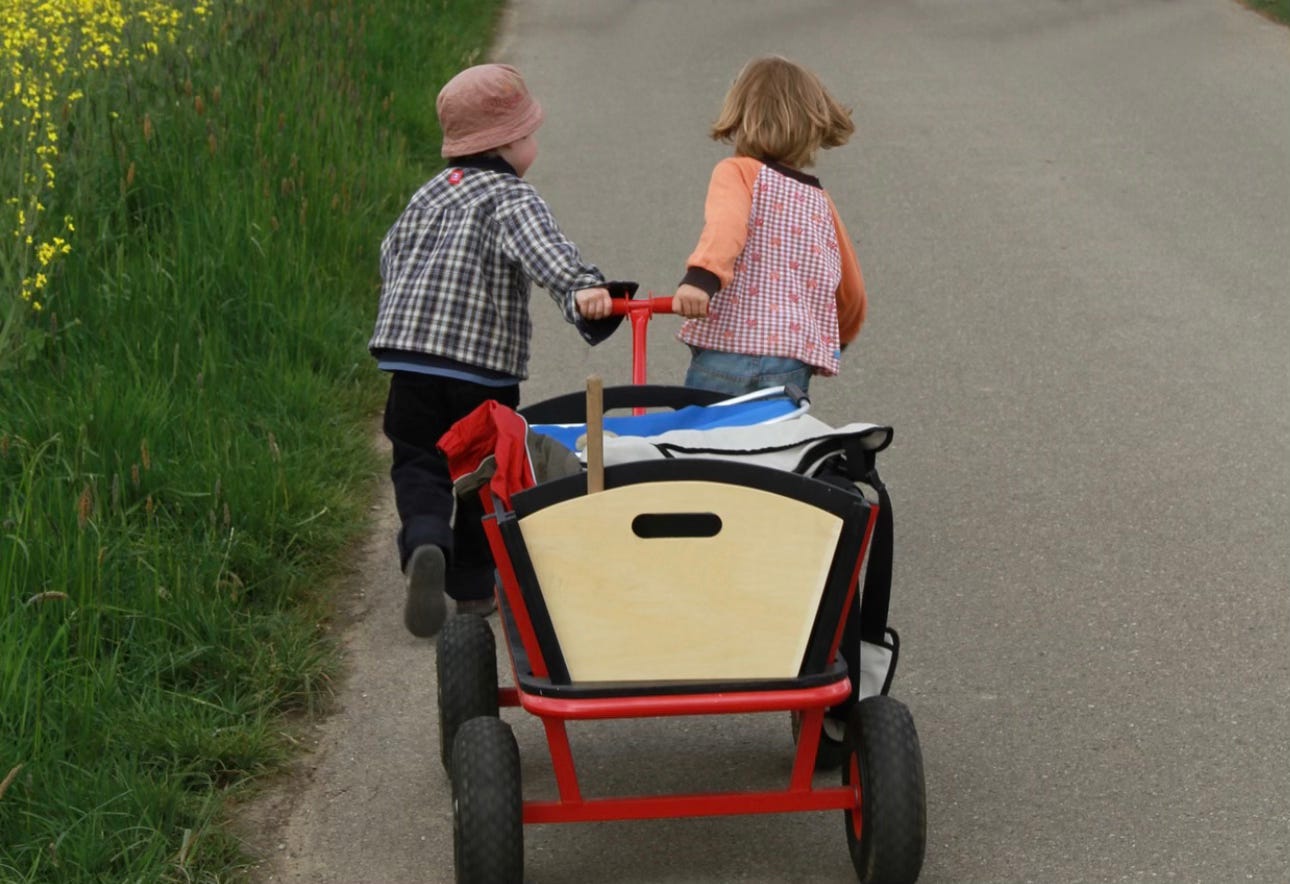
Today, I turn off the water when I brush my teeth and wash dishes with an eye toward water conservation.
Sometimes I find myself taking extra steps to conserve life’s necessities, even hoarding some things (socks, for example; I can’t have too many socks). At these times I remind myself that, within reason, “I can do whatever I want.” If someone stole all my socks, I could just get more. Maybe I won’t (can’t, really) go out and buy a Lamborghini, but I have nice car with café-au-lait colored leather (heated) seats and a garage to keep it out of the summer sun and the winter snows. I even pay someone to move the snow out of my way when it piles up, where once I would have shoveled it myself. I so appreciate this service, and I’m grateful that I can pay for it.
But I remember very well when I had to be at work by 8:00 am, riding into the city on a bus for which I waited on a street corner in all weathers. I can still feel the sting of icy rain in winter as well as the steamy heat of bus rides home on summer afternoons.
I can’t know whether there are some leaders who, like me, do recall what it’s like to be cold, leaders who do their best to make changes that help the families struggling to pay their rent or grocery bill, families who limit their travel severely because they can’t afford new, electric cars and don’t have enough money to fill gas tanks frequently—if they even have a car. But I do know that far too many of today’s leaders act as though they have no idea what it’s like to live a real life.
If they were ever cold, they’ve forgotten what that feels like. These are the people to whom Ivan Denisovich referred.
Do I feel guilty, living the life I have, having a privileged existence? No. Because I remember. So what I feel is gratitude. And in that gratitude I find a certain generosity, one that inspires me to give to others, to take steps and actions that benefit someone I don’t even know. This is not altruism. It’s an expression of gratitude.

You can subscribe for free to Robin Reardon Writes, though I hope you’ll consider becoming a paid subscriber. It’s not expensive, really! You’ll have access to everything I write on Substack. You’ll also have my undying gratitude.

One more thing: If you share this post, you’ll get credit for generosity, and I might get more subscribers.
I’m an inveterate observer of human nature, writing stories about understanding and connecting with each other. My primary goal is furthering acceptance of people who appear to be different from “us,” whoever that “us” might be. Check out my books on my website.